Optimizing Hospital Bed Management Using Simulation
Mithila Rajeshirke
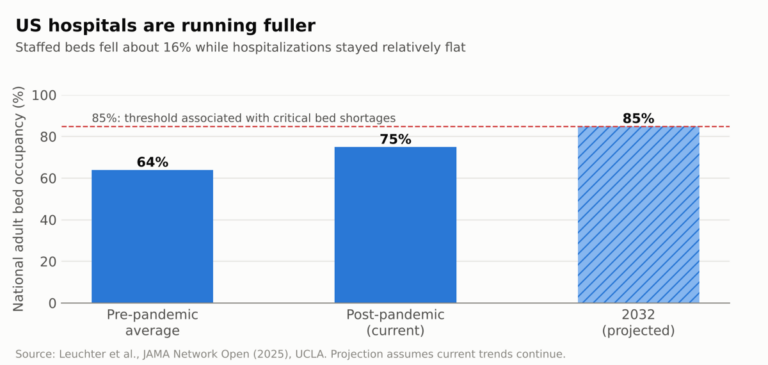
U.S. hospitals are running fuller than ever. National hospital occupancy now sits at about 75%, compared with a pre-pandemic average of about 64%, largely because the number of staffed hospital beds fell by about 16% while hospitalizations stayed relatively flat. If current trends continue, researchers at UCLA project that national adult occupancy could reach about 85% by 2032, a level associated with critical bed shortages (JAMA Network Open study, via Newswise/UCLA).
National adult hospital bed occupancy before and after the pandemic and projected for 2032 (chart prepared by Simulation Bureau from Leuchter et al., 2025).
Beds are where emergency, surgical and inpatient flows meet. When beds are not available, emergency patients board in the ED, surgeries are delayed and patients wait in hallways. Yet simply adding beds is expensive and often impossible without staff to support them. The real challenge is using existing beds as effectively as possible and adding capacity only where it makes the greatest difference. Simulation allows hospitals to find that balance.
Key Challenges in Hospital Bed Management
High and rising occupancy leaves little buffer for demand spikes. Even modest variation in admissions can push units to full capacity.
Long and variable length of stay (LOS) reduces bed turnover. Extended stays are associated with higher costs, bottlenecks in patient flow and greater risk of hospital-acquired infections (Hirani et al., 2025).
Another major concern is discharge delays. When discharges happen late in the day, beds are unavailable during the morning and early afternoon when admissions peak.
ED boarding is a direct consequence of bed shortages. Admitted patients waiting for an inpatient bed occupy ED space and slow care for new arrivals.
Mismatched bed types create shortages in some units and empty beds in others. Short-stay, isolation, behavioral health and ICU beds each serve specific patients.
Finally, surge events such as pandemics require rapid decisions about converting beds, opening temporary capacity and transferring patients between hospitals (Filip et al., 2022).
A bed management simulation model represents patient arrivals from the ED, elective surgery and direct admissions, length-of-stay distributions by patient type, bed allocation rules, cleaning and turnover times, and discharge patterns. It measures occupancy, waiting time for a bed, LOS and the share of patients treated, and lets planners test changes before committing resources.
One of the most valuable applications is finding the right number of beds. In a simulation of a temporary hospital during COVID-19, the waiting time for admission to the short-stay unit fell from about 1,600 minutes with 14 beds to roughly 300 minutes with 20–22 beds, with almost no further improvement beyond 22 beds. The same study tested how the probabilities of prescribing CT scans and COVID-19 tests affected the share of patients meeting a 146-minute LOS target (Campos et al., 2022). Identifying the point of diminishing returns prevents both under- and over-investment.
Simulation also plays a critical role in planning short-stay and observation capacity. In a Canadian emergency department expansion, a FlexSim model with design of experiments increased short-stay unit beds from 10 to 30 and mental health beds from 3 to 5. In the model, average LOS fell from about 2,214 minutes to 461 minutes and the time from bed to short-stay unit dropped from 367 to 146 minutes (Gabriel et al., 2020).
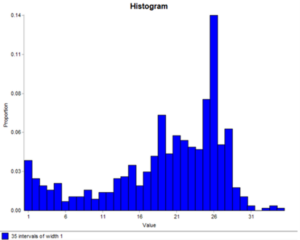
Another important capability is testing bed protocols under special conditions. In a behavioral health inpatient facility, discrete event simulation evaluated COVID-19 patient flow protocols to optimize bed utilization while maintaining infection control, comparing LOS for detoxification and rehabilitation patients (Blickstein et al., 2023).
Histogram of rehabilitation length of stay from a behavioral health bed simulation. Source: Blickstein et al., 2023
Simulation further supports room and capacity planning across departments. Facility design studies combine simulation with optimization to evaluate room occupancy, LOS and financial performance across departments such as dermatology, family medicine, gynecology, neurology and orthopedics (Hao et al., 2024). Capacity planning models in labor and delivery departments determine how many rooms and staff are needed to keep waiting times acceptable (Nankali et al., 2025).
Modern bed management also extends beyond a single hospital. During pandemics, simulation frameworks for strategic patient relocation track how many patients each hospital in a region serves and the cumulative cost of transfers, helping coordinators balance load across a network (Tabatabaee et al., 2025).
Simulation is also highly effective for testing discharge and turnover strategies. Hospitals can compare discharge-before-noon targets, discharge lounges, dedicated bed-cleaning teams and predictive bed assignment rules, and see how each affects morning bed availability, ED boarding and occupancy.
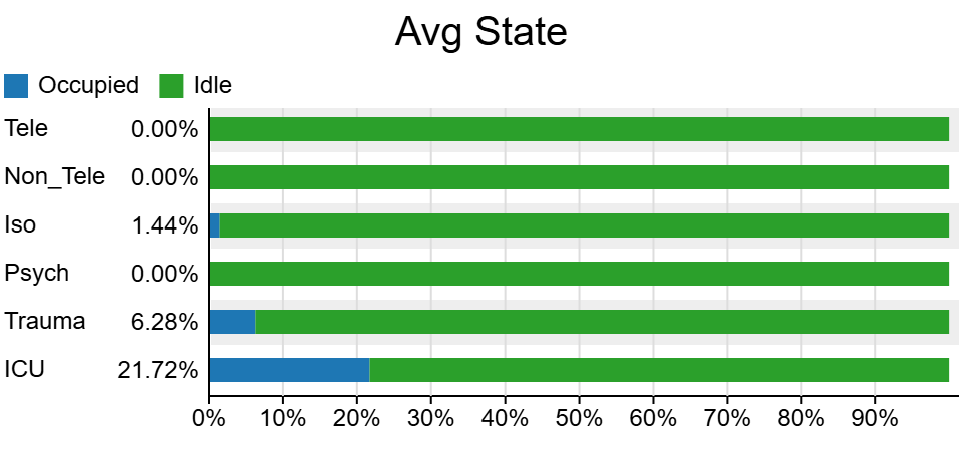
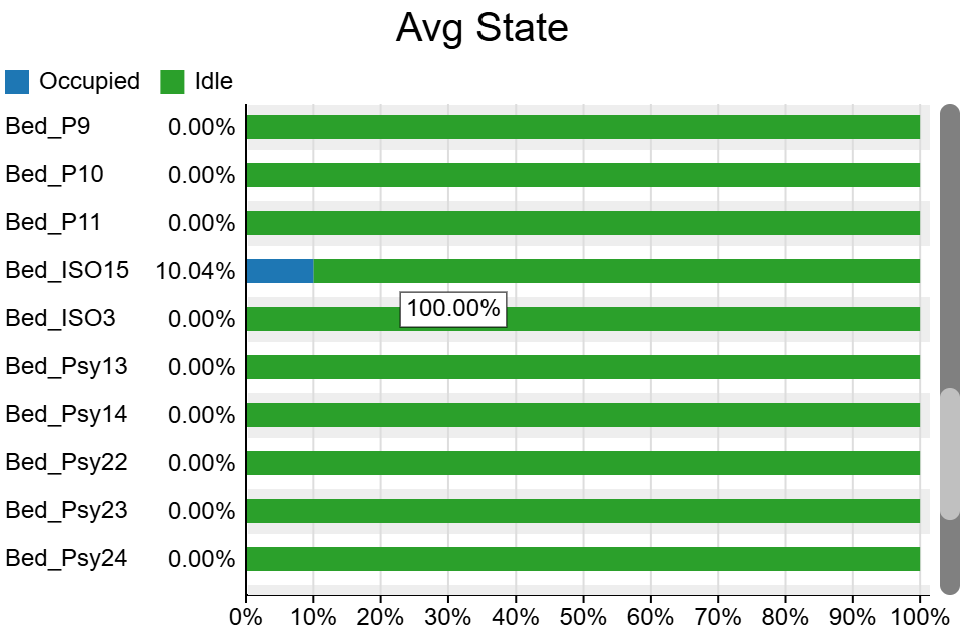
Simulation Bureau bed management dashboard
Simulation Bureau bed management dashboard
Overall, simulation helps hospitals get the most out of every bed. By revealing how admissions, LOS, discharges and bed types interact, it supports smarter capacity decisions, reduces boarding and waiting, and prepares hospitals for the rising occupancy levels ahead.