
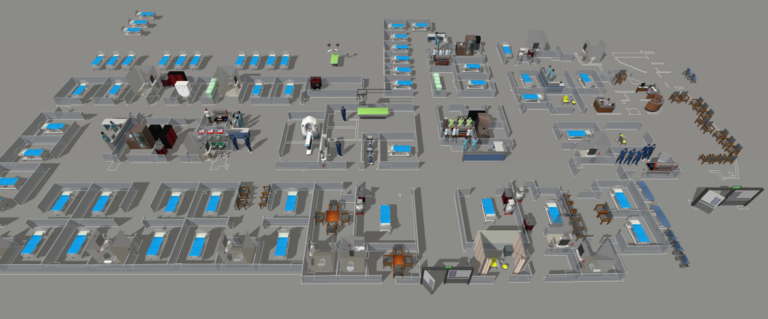
U.S. hospitals are running fuller than ever. National hospital occupancy now sits at about 75%, compared with a pre-pandemic average of about 64%, largely because the...
More than 138,000 nurses have left the U.S. workforce since 2022, and 39.9% of registered nurses and 41.3% of licensed practical and vocational nurses say they plan to...
The digital twins in healthcare market was valued at about $4.47 billion in 2025 and is projected to reach about $101.19 billion by 2031, a compound annual growth rate of...
Operating rooms are among the most expensive spaces in any hospital. A widely cited study of California hospitals estimated the mean cost of OR time at about $36 to $37...
Hospital spending in the United States reached $1.6 trillion in 2024 (KFF), and much of that cost is driven by how efficiently patients move through care. Emergency...
U.S. hospital spending reached $1.6 trillion in 2024, up from $1.4 trillion in 2022, and accounted for 40% of all growth in national health spending over those two years...
Emergency departments in the United States handle about 155.4 million visits a year, yet only 40.6% of patients are seen by a provider within 15 minutes of arrival (CDC...
National health spending in the United States reached $5.3 trillion in 2024, about 18% of GDP, and hospital care alone accounted for $1.6 trillion of it. Hospital...

The warehousing and storage market size has reached to $713.06 billion in 2025 and expected to grow to $1037.33 billion in 2030 at a compound annual growth rate (CAGR) of...